Bartlow Hills Barrow Cemetery
Large wooden chests with iron fittings were found in five mounds and there was a brick cist in another.
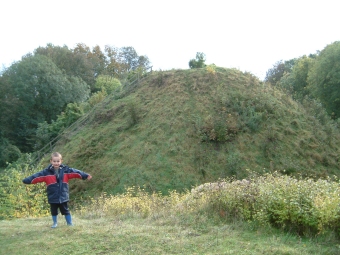
Burial mounds of this type were built in the late first and early second centuries AD in Eastern England and Belgium. Most artifacts in them show the high status of the owner; they were usually imported from the Rhineland and Northern Gaul, and are concerned with feasting and sacrificial offerings, rather than personal belongings which would be useful in the Afterlife.
In 1815 Busick Harwood "excavated" VI to provide work for the unemployed...."They began at the apex and digging down at great labour to the cist despoiled it of its contents, which were distributed and no account of them taken". However, some of the humbler items went to Saffron Walden museum where they survive. John Cage carried out better recorded excavations between 1832 and 1840. Eminent scientists, including Faraday, pioneer of electricity, analysed the contents of vessels and other organic remains. Cage's reports are the only evidence we now have, for all the objects were taken to Easton Lodge, Dunmow, where they were destroyed by fire in 1847.
The surviving mounds became overgrown before they were taken into guardianship by Essex County Council in 1978. the scrub was cleared and fences built for protection. the Hills passed to Cambridgeshire County Council in 1990 after a change in the County boundary.
Built of chalk and unusable for agriculture, the surviving mounds are a refuge for the distinctive plants and insects of chalk grassland; the Pasque flower grew here until early this century. Regular mowing in late summer will prevent the scrub from spreading
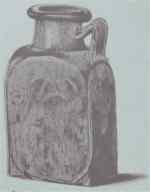
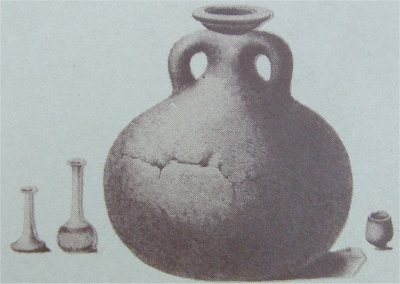
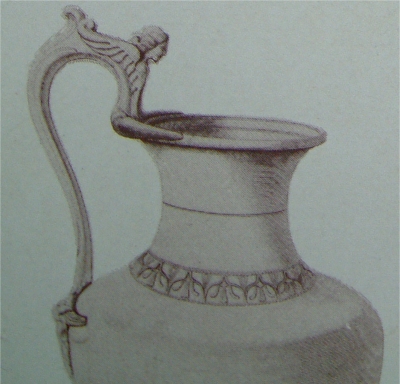 Objects
found in the Hills at Bartlow.
Objects
found in the Hills at Bartlow.
Left - glass cremation urn. Right and above - vessels found in barrows.
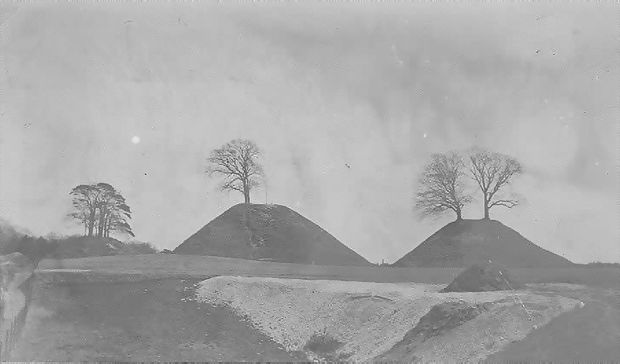
The Three Hills at Bartlow, circa 1900.